A Sweet Treat with Soul and Tradition
When we talk about the Peruvian alfajor, we’re talking about more than just a dessert—we’re talking about tradition. Although alfajores are enjoyed in Argentina, Uruguay, and Peru, it is in the latter where the classic version has remained most faithful to its roots: simple, soulful, and truly unforgettable.
What Is an Alfajor?
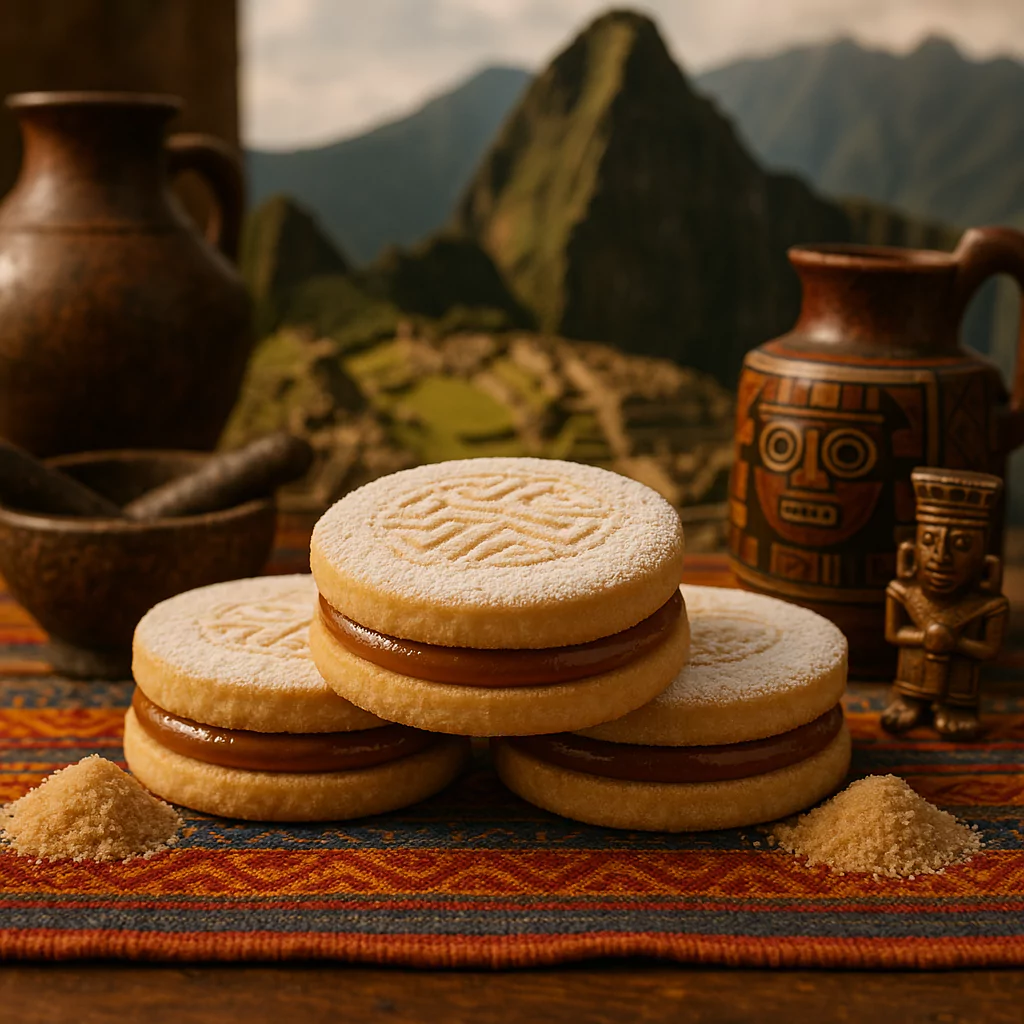
The Royal Spanish Academy defines an alfajor as a sweet made of two round cookies filled with something creamy, such as dulce de leche, chocolate, or jam. This description fits the Peruvian alfajor perfectly. While other countries have modernized it with chocolate coatings and sophisticated fillings, Peru preserves its original charm.
Origins of the Name and Recipe
The word “alfajor” comes from the Arabic al-hasú, meaning “the filling.” Its history begins during the Moorish period in Spain, where round almond cookies with honey were made. When the Spanish arrived in the Americas, they brought this recipe with them, which found a home in the kitchens of convents in Lima, where nuns silently competed to create the best version in the city.
A Cultural Icon in Peru
Over time, the Peruvian alfajor became deeply embedded in the culture. From royal banquets described by writer Ricardo Palma to the street vendors’ chants in the 19th and 20th centuries, this sweet earned a place in the country’s culinary soul.
Present Day and a Taste of Nostalgia
More than 300 years later, the Peruvian alfajor is still alive, found both in neighborhood bakeries and fine dining restaurants. Whether filled with dulce de leche, honey, or dusted with powdered sugar, it is a sweet that transports us to childhood, to grandma’s kitchen, or to a rainy afternoon with a hot cup of coffee and milk.
Because the Peruvian alfajor is not just a dessert… it’s a memory you can taste.